
AI in Marketing: Practical Guide for Hotels 2026
Unlock higher direct bookings with AI in marketing: segment guests, automate campaigns, and optimize hotel results—no technical team needed.
What is AI in Hotel Marketing in 2026?
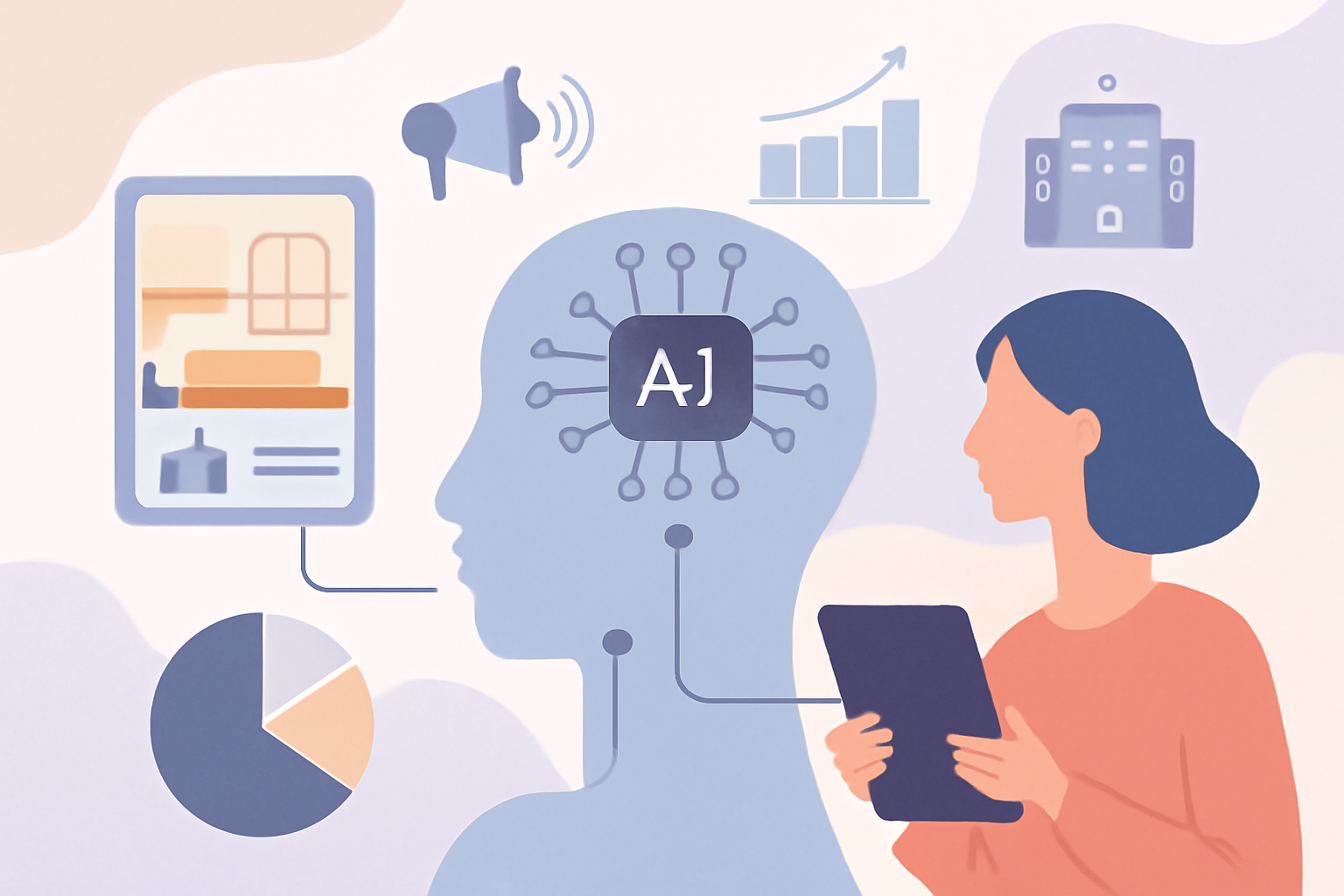
AI in marketing leverages automated algorithms and systems to manage guest data, personalize messaging, and optimize commercial campaigns with minimal manual effort. For hotels in 2026, its core function is to unify your digital ecosystem and activate campaigns that maximize bookings and guest satisfaction.
For independent hotels, AI enables precise segmentation based on guest histories, launches personalized messages, and boosts online visibility—constantly analyzing and adapting campaigns in real time. The outcome: more effective marketing, lower overheads, and an elevated, custom guest experience.
The breakthrough isn't just automation, but the ability to unify every guest data source—PMS, booking engine, WiFi, marketing campaigns—and base smart decisions on reliable, cross-referenced data. AI becomes an equalizer, letting independent hotels compete on data-driven marketing like a large chain.
Solutions such as GuestBrain (guestbrain.io) streamline this process, integrating all guest data and executing multichannel AI-powered marketing. For a step-by-step roadmap, visit our complete independent hotel AI marketing guide.
Key Processes AI Can Automate and Optimize in Hotels
The primary value of AI in hotel marketing is automating and optimizing previously manual, time-consuming tasks—think guest segmentation, personalized email delivery, and digital ad campaign management—all handled seamlessly.
Advanced AI detects patterns in reservation, booking engine, and guest behavior data. It can auto-launch multilingual email campaigns, personalize content by guest profile, and optimize Google/Meta Ads to drive down cost per booking—not just cost per click. This amps up ROI and slashes wasted ad spend.
AI-powered guest communication means instant WhatsApp responses for FAQs, automated upselling suggestions, and requests for reviews after checkout. Automation frees your team up for high-value tasks and guarantees immediate, consistent guest support, any hour.
A real-world example: an independent hotel in Mallorca went from 0% to 40% visibility in ChatGPT searches within two weeks, simply by coordinating AI-driven content updates and multilingual response management. This uplift was achieved by connecting guest profiles and digital channels through advanced hotel AI tools (learn about guest visibility via AI here).
Current Limits of AI Applied to Hotel Marketing
While AI-driven marketing brings a new standard of automation, it can't solve every challenge. Even in 2026, the most significant limit is the quality and integration of your guest and reservation data—if your PMS, booking engine, WiFi, email, and campaigns aren't truly connected, AI can't reach its full potential.
Strategic creativity and deep knowledge of your hotel's brand values, market positioning, and local destination remain human domains. AI's strengths are in suggesting, executing, and analyzing—not in setting vision or designing extraordinary experiences.
Another critical boundary: 'over-automation.' Too much automation risks robotic guest communications, irrelevant suggestions, or brand missteps. Periodic human review and adjustment safeguard brand voice, guest rapport, and campaign quality.
Importantly, hotel AI marketing platforms do not replace revenue management or pricing systems. Their focus is executing campaigns and maximizing booking conversion. For more, see our detailed AI for hotels overview.
How to Implement AI Marketing Strategies Without a Technical Team
In 2026, setting up AI in marketing for an independent hotel is easier than ever when you follow a strategic plan. Step one: select a platform that directly connects with your existing systems—like GuestBrain, which sits on top of your PMS and booking engine.
The next action: centralize all guest data to create unified records, pulling from reservations, emails, WiFi sign-ins, messaging, and more. This enables AI to segment audiences and personalize communications automatically, boosting open rates and bookings.
Automate multilingual email campaigns, deploy and refine Google and Meta Ads, and track true cost per reservation. Additionally, set up AI-driven WhatsApp communications and reputation monitoring. Platforms specialized for hotels provide dashboards to make this manageable without an in-house tech team.
For independents eager to reclaim data from OTAs and send impactful newsletters, the captive WiFi portal for hotels unlocks direct access to verified guest emails—even for OTA bookers.
Frequent Mistakes, Costs, and Essential Metrics for Hoteliers
A leading mistake in hotel AI marketing: relying on fragmented, outdated guest data. Without a full 360º view, AI’s impact on personalization and revenue plummets.
Over-automation—running campaigns without any human oversight—often results in unnatural guest experiences and spammy emails. Regularly reviewing and fine-tuning your system keeps your brand engaging and relevant.
Superficial metrics like open or click rates aren’t enough. For 2026, measure real business value: bookings attributed to campaigns, revenue per guest, and post-stay satisfaction. Best-in-class platforms cross-reference guest histories so you can see precise 'before-and-after' AI results.
On costs, solutions like GuestBrain are far more affordable than assembling a comparable in-house team. GuestBrain consolidates multiple tools, handling execution with less intervention. For ROI estimates and specific pricing, see current pricing details and compare with what you spend on staff or agencies.
Actionable Examples of AI in Hotel Digital Marketing
AI in marketing transforms hotel performance with practical actions: segmenting and sending automated, multilingual newsletters; dynamically optimizing digital ads to reduce cost per reservation; and running personalized WhatsApp campaigns for pre- and post-stay communication.
A top example is deploying an AI-powered CRM built for hotels. This enables you to trigger campaigns for target dates or guest segments (families, repeat guests, event attendees), detect preferred languages, and identify special upselling opportunities. See an in-depth guide to hotel CRM with AI here.
A growing advantage is improving how your official site appears in ChatGPT or Gemini Q&A, ensuring you’re the answer when guests search in-destination. At the same time, 24/7 price parity monitoring helps catch rate disparities instantly—learn how AI supports hotel price parity.
Where traditional campaigns took days of manual effort, now one platform—like GuestBrain—replaces services like Mailchimp and Fideltour, empowering independents with chain-level marketing firepower.
How AI in Marketing Will Transform Hotel Strategy by 2027
Looking to 2026-2027, hyper-personalization, real-time decision-making from unified data, and fully automated guest engagement are set to define leading hotel marketing strategies. AI will not just trigger campaigns—it will self-learn from each interaction and continually refine conversion tactics.
Independent hotels will need solutions that integrate all touchpoints: reservations, communications, guest satisfaction scores, and even WiFi activity, into a single system. This enables AI to scale marketing without piling on admin work or dependence on external agencies.
GuestBrain (guestbrain.io) exemplifies this future—it acts as the 'brain' that gives independents the digital-strength of a major chain, executing multi-channel initiatives and cross-referencing data in real time. See more strategies and case studies in the hotel AI marketing blog.
Frequently asked questions
More articles to go deeper into AI and hospitality
Keep reading
- AI for hotel marketing
Hotel advertising: a practical guide with examples
Distribute your hotel advertising budget for real direct bookings, optimize ads, and measure real ROI per reservation with AI—practical tips and 2026 cases.
- hotel newsletter and email marketing
Hotel newsletter and email marketing: practical guide
In 2026, hotels need email marketing beyond Mailchimp: unify guest data, automate multichannel campaigns, and measure real bookings with new CRM and AI
- wifi-marketing-hotels
What Is a Captive Portal? How It Works in Hotels
Learn how a captive portal in hotels unlocks guests’ real emails, drives direct bookings and powers hotel CRM and marketing in 2026.