
How Google Hotel Ads Works: Practical Guide for Hotels
Understand how Google Hotel Ads works in 2026, the real costs, and actionable steps hotels can take to boost direct bookings and attribute results without
What Is Google Hotel Ads? Definition and Opportunity for Hotels
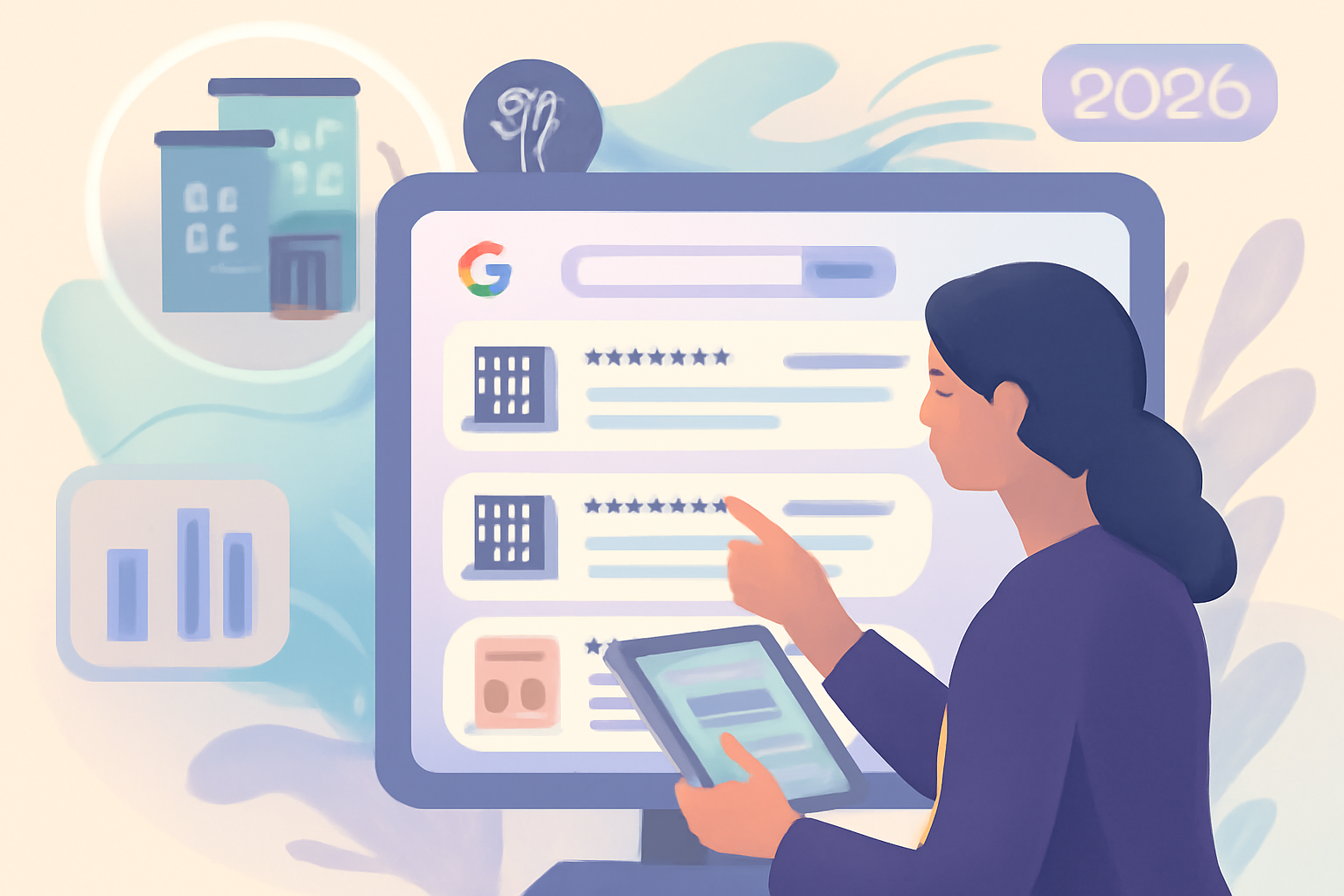
Google Hotel Ads is Google’s flagship ad platform built specifically for hotel bookings. It displays your hotel, rates, and reservation links right inside Google Maps, Search, and Google Travel, making it easy for travelers to compare options and book directly.
By 2026, Hotel Ads stands as the most consulted travel display globally, serving both independent hotels and major chains. Showing up here isn’t just a visibility boost—it’s a must for driving direct sales and reducing costly OTA commissions.
Google Hotel Ads offers two types of links: Google Free Booking Links (your official site, for free), and paid placements. Paid ads occupy the top slots, but both types work together to maximize guest reach.
Below, we’ll walk you through—practically and in detail—how Google Hotel Ads works, exactly what it costs, and how independent hotels can make the most of it today.
- Ads on Google shown only for hotel rooms and properties.
- Appear in Google Maps, Search, and Google Travel.
- Include both paid and free links directly to your official site.
- Allow for direct bookings, challenging OTAs.
- You don’t need to belong to a chain to participate.
How Google Hotel Ads Works: Key Steps for Independent Hotels
You don’t need to be part of a chain or a technical expert to get started with Google Hotel Ads as of 2026. The enrollment process is now straightforward for independent hotels, but still requires a few concrete steps and minimum setup.
First, you’ll need your own website with an operational booking engine and digital connectivity to your inventory systems (your PMS and booking engine). Don’t switch tools: Google Hotel Ads sits above solutions you already use.
We recommend consolidating campaign management and analysis in a specialist platform such as GuestBrain, which pulls your data together, optimizes attribution, and shows your true cost per direct reservation in a clear dashboard.
Once connected, activating both your paid ads and Free Booking Links is a matter of days. The crucial factor: always ensure data in Google (rates, images, availability) matches your official website exactly.
- Live official website with an active booking engine.
- Connectivity to your existing reservation and inventory systems.
- Accurate, up-to-date Google My Business profile (hotel name, services, images).
- Centralized management and measurement—ideally via a hotel tech and marketing platform.
Free Booking Links vs. Paid Ads: Navigating Google’s Hotel Display
When a traveler searches for a hotel on Google, multiple links appear under each listing: some are paid—at the top, with extra prominence—and some are free, usually located below the main block. Both can drive direct bookings.
The main benefit of Google’s Free Booking Links is zero advertising cost: you can compete on direct bookings without ad spend, though these placements are less prominent. Paid ads buy you top positions, stronger call-to-action, and richer analytics—but require careful investment management to ensure ROI.
Ideally, both options should work together. Even small independent hotels can rely on Free Links to get started, then decide when and where to invest in paid campaigns to boost share during key seasons.
The key is ongoing tracking: see which channel is truly delivering bookings, then adjust budgets and focus based on seasonality and your goals.
- Free Booking Links: cost nothing, show your direct site just below paid spots.
- Paid Ads: appear on top, follow a bidding model, offer maximum exposure.
- Both channels can—and should—be managed together in a single platform.
Google Hotel Ads Cost: Bidding Models and Key Factors in 2026
When asking how Google Hotel Ads works and how much it costs, the answer is: there’s no fixed price. The platform offers flexible bidding models, letting you tailor costs to your strategy, your market’s competitiveness, and your hotel’s goals.
In 2026, the main models are: pay-per-click (CPC), pay-per-reservation (CPA), and advanced CPA (pay only on consumed stays). Your choice impacts how much exposure you get, your ad spend risk, and how simply you can gauge returns.
Other factors swing your costs: travel demand in your location and period, the quantity and quality of your property images, your online reputation, and—most crucially—price parity with OTAs. Automated optimization powered by AI in GuestBrain (guestbrain.io) means your campaigns auto-adjust for performance, taking guesswork out of the process.
A small hotel may get value on free links alone, but a hybrid approach—layers of both paid and organic listings—usually yields higher direct booking share, especially in competitive destinations or busy dates.
- CPC Model: pay per click leading to your website.
- CPA Model: pay only when you get a reservation.
- Advanced CPA Model: pay for reservations only once the guest actually stays.
- Cost varies by location, competition, and season.
- Profile quality, reputation, and rate parity all impact cost and results.
Measuring Google Hotel Ads Performance: Why Attribution Matters
Your investment in Google Hotel Ads is successful only when it drives real direct bookings—not just clicks or exposure. Solid attribution means you know exactly which campaign, newsletter, or channel generated each booking, justifying your ad spend.
To get this level of clarity, you need a platform that captures every booking—plus its campaign or channel source—in a single dashboard. With GuestBrain, for instance, you see at a glance how many direct bookings stemmed from each live ad campaign, and your true cost per booking.
Attribution also reveals how different channels (free links, paid ads, email campaigns, your CRM) interact—and which combination boosts bookings most. This drives fact-based investment and avoids wrong conclusions based only on impressions or clicks.
For a deep dive, explore our booking attribution guide for strategies on common pitfalls and taking control of your booking data.
- Attribute every booking to the exact channel/campaign that caused it.
- Track true cost per booking live—not just clicks.
- Use platforms that bring together all of your channels seamlessly.
- Analyze free, paid, email, and CRM data collaboratively to guide your spend.
Common Mistakes When Advertising Your Hotel on Google Hotel Ads
One of the most critical errors: launching paid campaigns without tracking actual direct bookings. Without this, you never know if your spend is justified—or wasted. Another pitfall is ignoring Free Booking Links, missing low-cost, high-impact direct bookings.
Neglecting to analyze price parity between your site and OTAs can tank both your reputation and campaign results. If Google picks up lower rates on OTAs, it’ll always display their links above yours, in both paid and free placements. Your site must always offer the best rate.
A key mistake is running fragmented campaigns—email, ads, reputation—without a unified marketing ‘brain’ to attribute, optimize, and see results in one place. Platforms like GuestBrain (guestbrain.io) deliver this ‘single pane of glass’ for independents needing end-to-end digital strategy.
Finally, a neglected, outdated Google My Business profile (no new photos, missing descriptions, outdated services) will drag down campaign effectiveness—it’s where most travelers get their first impression.
- Not tracking real bookings by channel and campaign.
- Overlooking Google’s Free Booking Links—missing free sales.
- Ignoring rate parity: OTAs win if they undercut your price.
- Fragmented management: no single dashboard for results.
- Outdated or incomplete Google My Business listing.
Trends and Success Factors in Google Hotel Advertising for 2026-2027
The future of hotel advertising is all about intelligent automation and unified campaigns—combining Hotel Ads, AI, reputation, CRM, and true omnichannel marketing in one platform.
An independent hotel in Mallorca went from 0% to 40% visibility in ChatGPT in two weeks with GuestBrain.
Price parity monitoring and protection of your direct channel will remain fundamentals for competing with OTAs. Regularly auditing, correcting anomalies, and tracking visibility in IAs like ChatGPT, Gemini, or Claude are now standard best practice for any serious hotelier.
For actionable strategies and solutions built specifically for hotels, check our complete Google Hotel Ads guide for independents, as well as our reference hotel technology solutions for 2026.
- AI-driven automation and precise attribution—non-negotiable by 2026.
- Unified visibility across Google and next-gen AI platforms.
- Integrated monitoring for rate parity and online reputation.
- Single dashboards, automated workflows—less need for large teams.
- Omnichannel: email, ads, and WhatsApp in one place.
Conclusion: Why Google Hotel Ads Is an Essential Investment Now
In 2026, Google Hotel Ads is the #1 tool to win direct bookings, reduce OTA dependency, and keep tight control of your profit margins.
No matter your property’s size or the resources of your marketing team, the platform is designed for those seeking real, measurable results with granular cost control.
Taking advantage of both Free Booking Links and paid ads—with best-in-class analytics and attribution—can radically shift your direct booking mix.
Ready to level up? Explore GuestBrain’s tech on our Google Hotel Ads for independent hotels landing, review AI marketing software for hotels, or request a tailored proposal on our pricing page.
Frequently asked questions
More articles to go deeper into AI and hospitality
Keep reading
- HOTEL SOFTWARE & TECHNOLOGY PROVIDER
Hotel Software Types and How to Choose in 2026
Complete 2026 guide to hotel software: main types (PMS, booking engine, CRM, AI marketing) and how independent hotels can choose the right system for direct
- AI for hotels
AI Tools for Hotels: Complete Guide and FAQs
Comprehensive 2026 guide to AI tools for hotels: categories, guest data, marketing, communication, reputation, and visibility. Key criteria and actionable tips.
- AI for hotels
AI in Hotel Industry: What Works and Real 2026 Trends
Discover how AI in hotel industry delivers results: proven uses, false promises, actionable metrics and trends for hotels by 2026.