
AI-powered hotel marketing tactics for 2026-2027
Unlock the power of AI to boost direct bookings, automate campaigns, and level the playing field for independent hotels in 2026.
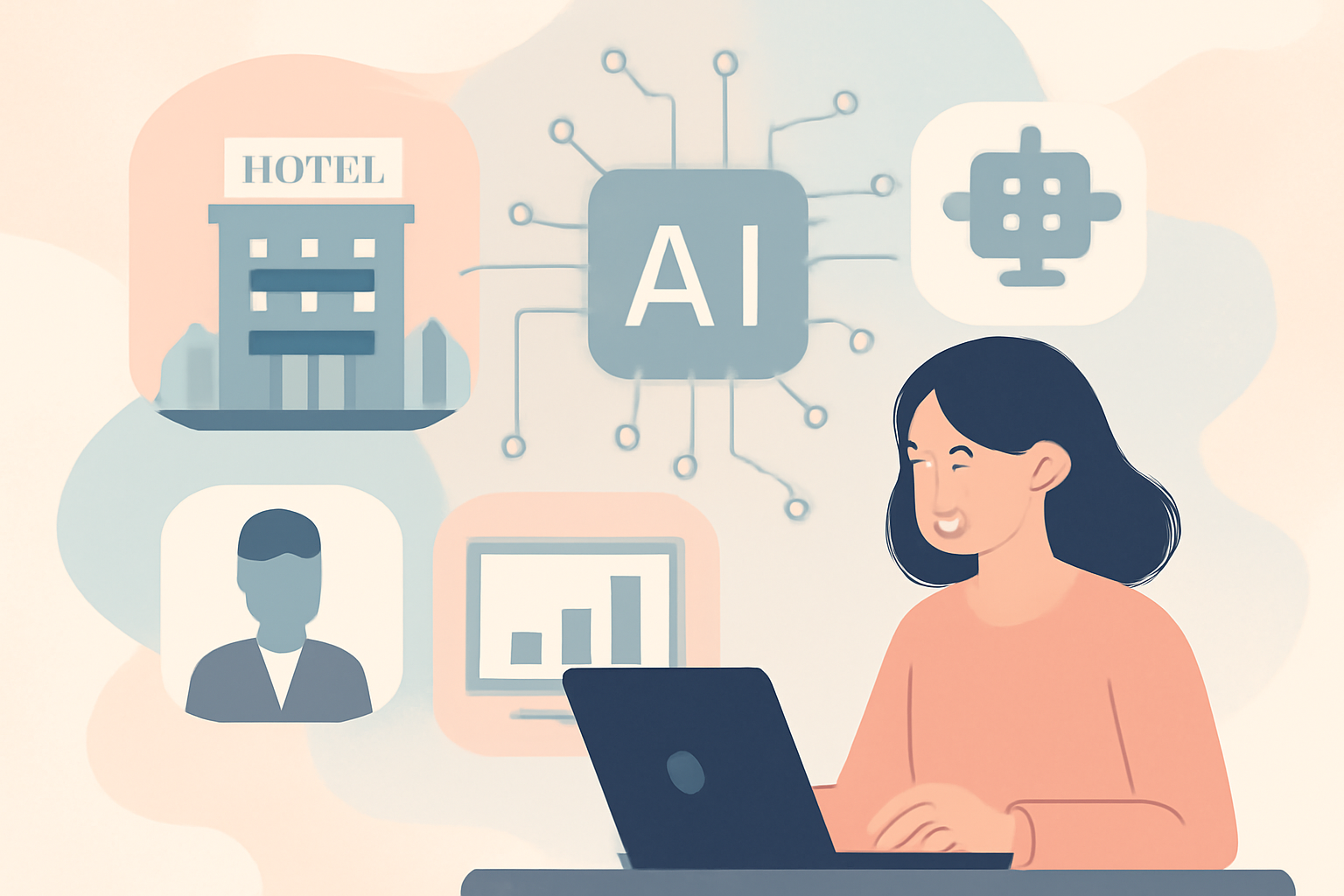
AI takes center stage in hotel marketing for 2026
The hotel marketing climate has evolved more from 2023 to 2026 than in the previous ten years. Independent hotels now face a digital landscape dictated by automation, AI-driven personalization, and relentless focus on guest data. While hotel chains already enjoy these advantages, for the first time, independents can truly catch up thanks to the rapid democratization of artificial intelligence.
By 2026-2027, the ability to segment, personalize, and automate campaigns and communication is no longer optional. Maintaining profitability and market share demands automated tactics that were once exclusive to teams of marketing specialists.
Tech like GuestBrain (guestbrain.io) has levelled the playing field by connecting seamlessly on top of a hotel's PMS and booking engine. It centralizes guest and reservation data, then executes digital campaigns and tailored guest interactions—all from a single platform.
The secret is leveraging fresh, actionable guest behavior data, monitoring every channel’s ROI, and reacting instantly to swings in demand or competitor activity. Genuine competitive edge now comes from those who harness these feedback loops in real time.
Key operational pillars to compete in 2026-2027
Competing with big hotel brands no longer requires a sprawling in-house staff or a bottomless marketing budget. Start by centralizing and cleaning your guest and reservation data—a feat only possible if your CRM/CDP integrates directly with your PMS and booking engine.
Next, automate Google Ads, Meta, and digital campaigns with AI-driven optimization targeting actual cost per booking (CPA), not just clicks or impressions. Modern platforms routinely outperform both agencies and in-house teams by learning and adapting around the clock.
Price parity control has become non-negotiable: live 24/7 tracking of your direct channel versus OTAs prevents revenue leakage and maximizes the advantage of your own site. Ignore this, and you lose ground to both OTAs and aggressive competitors.
Guest chat is evolving too: integrating multilingual AI-powered WhatsApp not only speeds up response times but drives engagement and boosts booking conversion across the reservation journey. See how AI solutions for boosting direct bookings are transforming the field.
Multichannel automation and advanced segmentation
Generic, one-size-fits-all messaging is worse than ineffective in 2026—it actively damages brand perception and deliverability. The baseline is now dynamic segmentation, built from each guest’s unique history, spanning reservations, web interactions, campaign behavior, and multi-channel engagement (email, WhatsApp, etc.).
Platforms like GuestBrain empower you to automate campaigns in multiple languages, customize subject lines, and run A/B tests, while tracking in-depth opens, clicks, and attributed bookings—all linked to unified guest profiles.
The result: your team executes smarter, more effective campaigns with less effort and fewer mistakes, as the platform itself constantly learns and optimizes ad spend and messaging for you.
Beyond outbound campaigns, AI can automate replies to FAQs, deploy targeted offers by segment, and personalize pre-arrival communications. This ensures a seamless, high-value experience at every guest touchpoint and helps AI-powered guest communication convert inquiries into bookings, not just leads.
AI conversational visibility: the new direct booking channel
By 2026, more and more travelers are using ChatGPT, Gemini, and other conversational AI assistants to research and even book hotels. If your property doesn’t surface—or appears with poor details—you’re missing valuable direct reservations and ceding control of your digital reputation.
Optimizing your hotel’s data and FAQs for AIs has become critical, both onsite and across AI-managed channels. Presence in these tools directly shapes the booking decision funnel—vital for capturing last-minute or spontaneous travel demand.
A real example: an independent hotel in Mallorca went from zero to 40% visibility in ChatGPT within two weeks after refining its multi-language content and FAQs. This conversion boost, previously a chain-only perk, is now accessible for any hotel adopting the right strategies and AI hotel visibility tools.
AI-driven visibility not only cuts acquisition costs, it ensures your brand is recommended first by intelligent assistants, not buried behind OTA offers.
Price parity control and live monitoring with AI
Manual price parity checks are obsolete in 2026: rate shifts and OTA promotions change too rapidly for hotel teams to track. AI platforms now monitor your official site price against OTAs around the clock, instantly alerting you to undercuts or mismatches.
This shields your direct booking flow, but also improves your standing in metasearch results and boosts your relevance with AI-driven assistants, who prioritize hotels offering better direct value.
Automated monitoring closes revenue leaks and ensures your marketing investment is focused on periods and markets where your price is truly competitive. This is an essential tactic for every revenue-focused marketer.
Want to learn more on practical execution? Check out our dedicated resource on AI for hotel price parity.
Measuring what matters: key success metrics for 2026
Clicks, likes, or social followers are poor proxies for success in 2026. The real metric is CPA—cost per acquisition or booking—measured by connecting PMS-reported actual revenue with AI-enabled campaign attribution and precise segmentation.
It’s crucial to track your hotel’s visibility across AI assistants (ChatGPT, Gemini), measure the share of bookings from automated campaigns, and monitor real engagement rates in both messaging and email channels.
Live dashboards tying together these KPIs empower you to allocate budget only where you see hard conversion—and shift strategies early to mitigate losses. Managed properly, platforms like GuestBrain provide a 360º action dashboard uniting campaigns, communications, and revenue data.
Don’t get trapped by black-box tools or vanity metrics; insist on full traceability, actionable attribution, and dynamic segmentation to maximize ROI and keep your investment laser-focused.
Intelligent automation or traditional agency? Your 2026 decision
In the current environment, a traditional agency approach introduces bottlenecks: slow manual reporting, limited personalization, and campaign optimization by hand. Intelligent AI automation offers agility to test, measure, and scale what's working, effectively replacing several digital marketing roles in one integrated solution.
Platforms like GuestBrain concentrate all the capabilities of a dedicated marketing team—handling segmentation, campaign automation, proactive communication, and true performance attribution in a single 'brain.'
This approach doesn’t replace your PMS or booking engine—instead, it supercharges them—unlocking the full value of the data your hotel generates across every digital touchpoint. The takeaway: invest where each dollar and minute deliver proven, measurable value for your business.
Ultimately, your ability to integrate and automate will decide who wins the battle for hotel demand in 2026. Choosing between a traditional agency and a smart platform is now about results and operational speed, not just price.
Getting started: strategic checklist for your hotel
Step one: assess the quality and accessibility of your guest and reservation data. Without a single, unified guest profile combining all sources, your AI strategy will be hamstrung. Audit your existing CRM, PMS, and booking engine, and map out potential integrations.
Choose a platform that automates campaigns and multichannel communications, tying together your crucial data and attributing revenue at the channel level. Bring email, WhatsApp, true performance attribution, and live price monitoring into one system.
Implement visibility monitoring across leading AIs (ChatGPT, Gemini), and set up clear CPA, conversion, and engagement indicators. This ensures you're investing where it counts and not wasting budget on untraceable tactics.
Empower your team not with more manual tasks, but with actionable, real-time data. Independent hotels now have access to mature AI solutions that deliver a true competitive edge. Get inspired by our hotel blog or deep-dive into the core AI hotel platform features to shape your next steps.
- Audit and centralize your guest/reservation data.
- Integrate your PMS and booking engine with CRM/CDP and marketing tools.
- Automate multichannel campaigns with AI-driven optimization.
- Monitor visibility and price parity in real time.
- Define and track actionable metrics (CPA, engagement, AI visibility).
- Evaluate integrated platforms like GuestBrain (guestbrain.io).
Frequently asked questions
More articles to go deeper into AI and hospitality
Keep reading
- hotel newsletter and email marketing
Hotel newsletter and email marketing: practical guide
In 2026, hotels need email marketing beyond Mailchimp: unify guest data, automate multichannel campaigns, and measure real bookings with new CRM and AI
- AI for hotel marketing
Hotel advertising: a practical guide with examples
Distribute your hotel advertising budget for real direct bookings, optimize ads, and measure real ROI per reservation with AI—practical tips and 2026 cases.
- Hotel CRM, AI for hotels, hotel marketing
Hotel CRM Systems with AI: 2026 Guide to Choosing One
Find out what a modern AI-powered hotel CRM must offer in 2026, how it centralizes guest data, and the features to demand for real direct revenue growth.