
AI in the Hospitality Industry: Practical Guide for Hotels
Unlock more direct bookings and automate hotel marketing with actionable AI strategies and examples for independent hotels, no technical knowledge required.
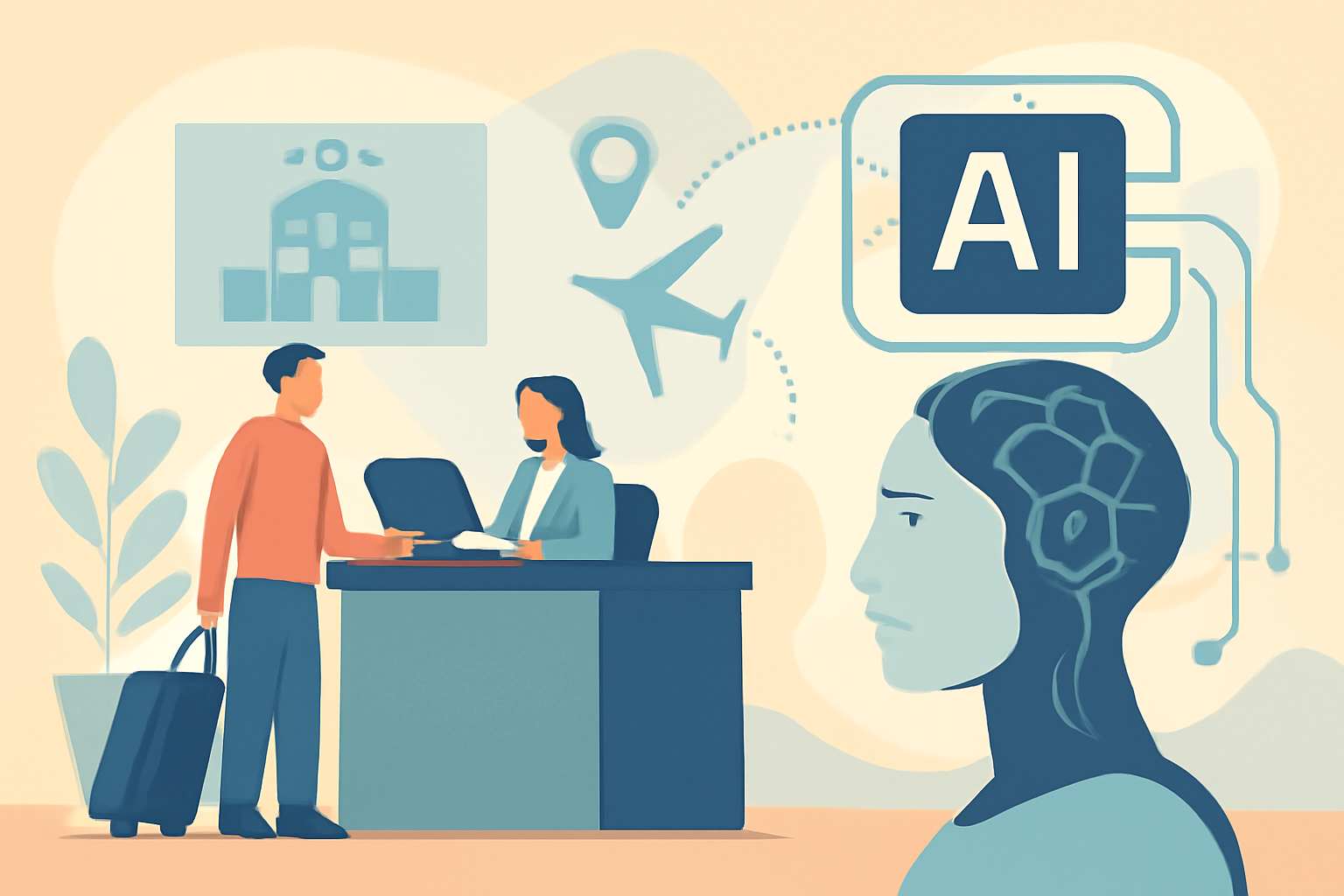
What Is AI in the Hospitality Industry and How Is It Transforming Hotels?
AI in the hospitality industry involves intelligent systems that analyze large volumes of hotel and tourism data, spot patterns, and make real-time decisions automatically. Within hospitality, this translates to more efficient operations, time savings, and personalized guest experiences delivered at scale without losing quality.
Unlike many other sectors, hospitality and tourism rely heavily on personalization and immediate response. AI enables independent hotels to anticipate guest behavior, tailor communications, and automate vital processes like campaign segmentation or digital guest support.
Today, integrating artificial intelligence in hotels is virtually essential to compete with leading brands and OTAs. The real differentiator, however, lies in how these technologies are applied to deliver actionable, measurable outcomes.
For a deep dive into how hotels can use AI for real competitive advantage, see our expert AI for hotels guide, with clear criteria for selection and best practices for every hotel type.
AI Applications in Independent Hotels: Real Examples and Use Cases
The core AI applications in tourism for hotels include automated marketing (emails, CRM, segmented campaigns), reputation management, and direct guest communications via chatbots or WhatsApp. These tools free up valuable staff time while reducing dependence on large teams.
For example, AI systems can personalize messaging to each guest, optimize advertising spend on Google and Meta, and automatically analyze brand mentions. The net result: higher direct booking conversions, lower acquisition costs, and tighter control of the digital guest journey.
An independent hotel in Mallorca went from 0% to 40% visibility in ChatGPT in two weeks with GuestBrain. This proves the massive upside of securing presence in AI-driven recommendation platforms to capture new reservations.
Comprehensive solutions like GuestBrain (guestbrain.io) consolidate advanced segmentation, newsletters, and 24/7 rate parity monitoring into an easy-to-use dashboard.
Key Benefits of Artificial Intelligence in Hotels: Tangible Results in Tourism
The biggest advantage of AI hospitality solutions is their ability to enable hotels to do more with less. By automating repetitive tasks, property staff can focus on high-value guest experience work and strategic growth initiatives.
Independent hotels gain access to sophisticated marketing and loyalty techniques previously reserved for large chains: unified data analysis (CDP), transparent attribution of bookings, dynamic segmentation, and real-time reputation tracking.
AI also boosts direct booking visibility with optimized multichannel campaigns and branded WiFi portals. These capture the real email of guests with proper consent—even those who booked through OTAs. Data privacy is streamlined as well, automating consent management and GDPR compliance.
To dig deeper into using AI to increase direct bookings, explore our actionable content on how to increase direct hotel bookings and the impact of automated marketing.
Challenges and Risks of Implementing AI in Hotels: Common Errors and How to Avoid Them
Excitement about AI in hospitality often leads to missteps. One major risk is selecting generic, non-hotel-specific software, resulting in integration headaches and unrealistic outcomes.
Another frequent mistake is underestimating data management and privacy. All AI applications must follow regulations such as GDPR, maintain transparent consent systems, and avoid mishandling sensitive guest data.
Be wary of inflated promises and so-called 'magic solutions.' Rely instead on pragmatic metrics—direct bookings generated, open and click rates, improved AI channel visibility, and operational time savings. Training your staff is absolutely crucial to avoid blind dependence on the technology.
Get more practical details on automated rate parity monitoring and the fight against undercutting OTAs through smart use of AI.
How to Get Started with AI in Independent Hotels: Steps and Recommendations
Successfully implementing artificial intelligence in hotels begins with choosing a clear objective: do you want higher direct bookings, automated marketing, better digital guest service, or improved reputation management? Once your goal is set, select a platform built for the hospitality sector and tailored to your business type.
Prioritize systems that integrate smoothly with what you already use—your PMS and booking engine. Integration should be layered, not replacing critical functions, making guest data accessible from day one.
Train your staff to understand both the possibilities and the limitations of AI. Set out clear KPIs—cost per booking, conversion rates, response times, guest retention—and review progress at least quarterly.
For a market-wide look at the latest AI software for hotels and guidelines for making a smart selection, explore our specialized analysis.
Real Examples of Artificial Intelligence in Hospitality and Hotel Marketing
Top examples for 2026 include: WhatsApp assistants powered by AI for answering FAQs 24/7, automatic segmentation in multi-language newsletters, instant reputation alerts, and direct attribution of each booking to the correct marketing channel.
GuestBrain (guestbrain.io) is a market leader in delivering these unified capabilities. Its proprietary CRM and CDP combine guest history and activity, running multichannel campaigns that are GDPR-compliant and outperform most traditional hotel marketing agencies.
Unified platforms let small hotels compete directly with major chains—boosting return on investment and loyalty without growing headcount. This AI-powered, multichannel approach makes it possible to deliver both a highly personalized and profitable guest experience.
Take a hands-on look at how AI hotel CRM platforms can replace scattered tools and external agencies for independent hotels.
Choosing a Hotel AI Platform: Critical Criteria for Independent Properties
When selecting an AI platform for your hotel, focus on these essentials: a solution designed for independent hotels, user-friendliness, seamless integration with your existing tools, and full coverage of the guest journey lifecycle.
Avoid overly generic or highly technical platforms that overpromise full automation with zero human involvement. AI should be an asset for your human team—not a replacement. Evaluate the solution's data privacy, GDPR readiness, and ability to meet local legal requirements.
Look for a strong value proposition: flat-rate billing, no commissions on ad spend, support catered to independent hotels, and demonstrable, trackable results—see it in action with a demo or pilot. Choose a provider with its own brand and a verifiable track record in hospitality.
For more depth on segmentation, automation, and advanced guest marketing, see our expert guide on hotel newsletters as alternatives to Mailchimp and Fideltour.
The Next Step: Transforming Hotel Marketing with AI in 2026-2027
AI in hotel marketing is no longer a passing trend—it is a competitive necessity. Integrating AI allows you to launch automated campaigns, emails, and dynamic segments that reduce costs and accelerate direct guest acquisition.
Platforms such as GuestBrain (guestbrain.io) give hotels total control over their guest data ecosystem, ensure strong email deliverability, elevate the digital experience, and map the real impact of every action on direct bookings.
For 2026-2027, the challenge moves from simple adoption to operational excellence: using AI not just to automate, but to set your property apart from OTAs and big chains, turning every guest data point into an opportunity for genuine loyalty.
Explore actionable AI-powered loyalty strategies for independents in our hotel guest loyalty guide.
Frequently asked questions
More articles to go deeper into AI and hospitality
Keep reading
- AI for Hotels
AI for Hotels: Real Examples and Use Cases for 2026
Comprehensive guide (2026) with ai for hotels examples: actionable use cases in marketing, sales, and operations for independent hotels.
- AI for Hotels
AI Agents: Real Examples & Uses for Hotels
Explore practical AI agents examples for hotels in 2026: from true guest data centralization to automated marketing, visibility, and guest experience—beyond
- Hotel Functions (Newsletter, CRM, Reputation, WhatsApp, WiFi, Campaigns, Attribution)
WiFi Marketing for Hotels: Complete Practical Guide
Grow your guest email base, drive more direct bookings, and maximize marketing ROI through wifi marketing in hotels—full strategy, compliance and actionable