
AI Agents: Real Examples & Uses for Hotels
Explore practical AI agents examples for hotels in 2026: from true guest data centralization to automated marketing, visibility, and guest experience—beyond
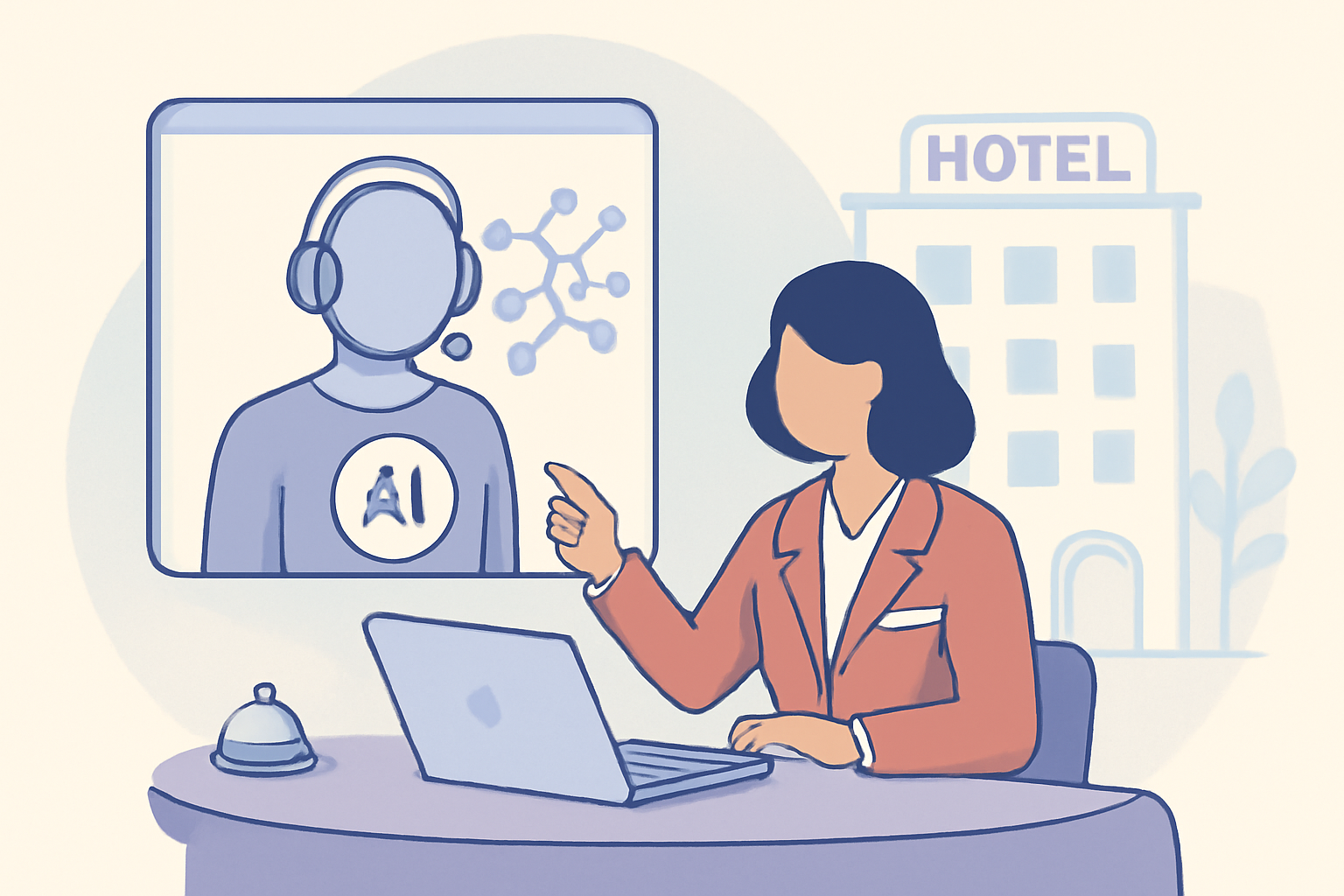
What are AI Agents? Definition, Value & Hotel Impact in 2026
AI agents are sophisticated software systems that perceive data across environments, process information, and interact with distinct platforms to drive specific objectives—like automated marketing, guest communication, or managing real guest data. Unlike simple scripts or chatbots, a true AI agent can interpret changing conditions, learn from past actions, and make independent decisions for next steps.
By 2026, AI agents power digital transformation throughout the hotel industry. They don’t just respond in predictable ways: instead, they act as centralized 'brains' orchestrating complex strategies, integrating dozens of guest data sources, and adapting to market shifts in real time.
This evolution has changed the playing field for independent hotels. Hoteliers now have access—via hospitality-focused solutions—to the sort of automation, intelligence, and efficiency that once took large marketing and analytics teams to achieve.
For a deeper look into the evolving software landscape and current use cases, review the AI software for hotels guide.
AI Agents vs. Chatbots: What Each One Really Does in Hotels
People often confuse AI agents with chatbots, but the difference is substantial. Chatbots are programmed for simple dialogue: they answer frequent guest questions or handle basic requests, always within a pre-defined conversational flow.
AI agents, in contrast, can process complex information—combining reservation data, preferences, marketing campaigns, and guest channels. They're capable of carrying out coordinated, automated actions across multiple platforms. For example, an AI agent could detect a drop in bookings and automatically launch or adjust campaigns, while a chatbot would only answer reservation FAQs.
Crucially, AI agents provide autonomy and ongoing optimization, making them fundamentally proactive rather than reactive. They create a real intelligence layer that orchestrates and improves every touchpoint, far exceeding what a chatbot can offer. For a practical side-by-side, see our AI software for hotels comparison.
- A chatbot replies to guest questions in real time (e.g., 'What’s check-in time?').
- An AI agent manages campaigns, optimizes messaging, and learns from guest interactions.
- AI agents can talk to external systems (PMS, booking engines, ad platforms) to execute complex workflows.
- A chatbot operates in a single messaging channel; an AI agent orchestrates multiple channels and actions at once.
AI Agents Examples: Real Applications in Independent Hotels
The advance of AI agents has opened up a new world for independent hotels—bringing the benefits once limited to major chains. In 2026, the most impactful AI agents are those automating digital marketing, orchestrating guest communications, and consolidating data in a single guest profile.
A typical AI agent for hotels might monitor price parity 24/7 and alert the manager if the hotel’s direct website rates slip below OTAs—without ever touching price-setting (which remains with the hotel). Another agent could check and improve how the hotel appears in search engines and public AIs like ChatGPT and Gemini, surfacing gaps and coordinating precise updates.
A real example: an independent hotel in Mallorca, after optimizing its content and FAQs across languages, increased its visibility in ChatGPT from 0% to 40% in just two weeks— all orchestrated by an AI agent dedicated to digital visibility.
Other agents manage targeted newsletters, adapting content based on guest behaviors, and synchronize campaign, booking, and WhatsApp interactions. Centralizing multi-channel communication and intelligent segmentation is key for driving direct bookings, as detailed in our guide on increasing direct bookings with AI.
To see how this works in practice, our page on AI agents for hotels explains which marketing and communication tasks an agent can take on in an independent hotel.
- Automatic, cross-channel optimization of Google Ads and Meta Ads for real booking acquisition.
- AI-powered, multi-language management of online reputation—scanning and responding to reviews.
- Precise segmentation and targeting for newsletters and personalized offer emails.
- Proactive, automated visibility management on public AIs (ChatGPT, Gemini) and search channels.
- Single-platform integration: direct channel, CRM, and campaign automation managed by one AI resource.
How AI Agents Work in Hotels—and Where the Limits Are
A hotel-focused AI agent ingests data from multiple streams—PMS, booking engine, CRM, sales channels—and then analyzes the context to trigger the right actions to meet the hotel’s goals. From launching new campaigns to sending customized reminders, these agents act automatically but are always governed by the objectives and limits set by the hotelier.
Unlike basic 'if-this-then-that' automations, AI agents dynamically adjust their behaviors depending on actual results. For example, they can change ad creative or fine-tune guest segmentations based on real conversions—not just static rules.
It’s important to recognize AI agents, advanced as they are, don’t replace human strategic judgment. Hotels must still provide oversight, set clear goals, and review metrics regularly. Critical decisions—like pricing or deal negotiations—still rely on the hotel manager, not on automation.
For practical insights and current use cases, explore our category on AI applications for hotels.
Core AI Agent Applications: Marketing Transformation for Hotels
By 2026, AI agents have revolutionized hotel marketing execution. They allow hoteliers to move from manual management and external agency dependence to smart, self-optimizing campaigns—maximizing spend, messaging, and targeting in real time.
An AI agent evaluates results across Google Hotel Ads, Meta Ads, and email newsletters, attributing each booking to the correct channel by reading revenue data from the PMS and booking engine. This means every euro spent is tied directly to tangible revenue, eliminating guesswork and enabling hands-off optimization of channel, message, and guest segments.
Platforms like GuestBrain (guestbrain.io) make this reality—replacing disconnected tools like classic CRMs, Mailchimp, and marketing agencies by binding acquisition and loyalty cycles into a single, AI-powered platform for independent hoteliers.
For a full walkthrough of how to configure and track conversion-oriented smart campaigns, dig into our guide on AI hotel marketing for independents.
- Automated A/B testing of subject lines and visuals for multi-language email campaigns.
- Dynamic budget reallocation between channels based on true cross-channel reservation attribution.
- Automatic activation or pause of search and social campaigns, reacting to availability or real-time demand fluctuations.
- Ongoing competitor monitoring and instant price parity alerts (never setting pricing, only alerting).
Transforming Guest Communication: Before, During, and After the Stay
AI agents elevate communication across every stage of the guest journey—before, during, and after the stay. They personalize outreach and anticipation of guest needs, automating messaging on WhatsApp, email, and other channels, all in the guest's language of choice.
For instance, agents can automatically send tailored WhatsApp welcome messages, nudge guests toward available services, and collect feedback after check-out. Every guest’s interactions—bookings, messages, feedback, preferences—are merged into a unified, up-to-date profile.
This centralization enables powerful segmentation for upsell proposals or loyalty campaigns, and precisely measures the impact of each interaction. Integrating WhatsApp, email, and WiFi marketing—as with a captive portal solution—lets hotels recover real guest contacts (even when bookings arrive with masked OTA emails).
For in-depth guidance on capturing genuine emails and turning OTA guests into future direct bookers, see our guide to the hotel captive portal solution. For broader automated guest communication strategies, visit our AI guest communication guide.
From Data Silos to One Brain: The AI Agent as the Hotel’s Data Nerve Center
One of the most significant leaps delivered by AI agents is real guest data centralization: bringing together PMS data, booking engine records, marketing campaign results, WiFi contacts, WhatsApp history, and reputation data—all tied to a single, ever-enriching guest profile.
This unified intelligence eliminates errors and duplication, orchestrating all marketing and communications from one 'brain'—the AI agent itself. Solutions like GuestBrain combine CRM, CDP, and operational execution, making fragmented hotel tech stacks a thing of the past.
The value for hoteliers is tangible: total visibility and control over customer bases, dynamic segmentation, actionable reporting, and instant reactions to anomalies or sudden market shifts. For a detailed breakdown of these capabilities, see our landing page on AI-powered hotel CRM.
Common Pitfalls & Best Practices When Choosing AI Agents for Hotels
With the hype around AI, hoteliers sometimes fall into classic traps: over-delegating strategic decisions to AI agents, expecting miracles without unifying databases, or failing to review configured objectives and metrics often enough.
A common error is assuming that simple chatbots (for automated replies only) will deliver transformative results or that automation alone is enough. Real success only comes when AI agents connect to all data layers and guest channels—not just one communication tool.
It's equally important to seek modular, open solutions that layer over your existing PMS and booking engine rather than replace them. GuestBrain stands out for this approach, integrating with top systems and adding intelligence without altering your hotel's core tech. Review your current stack and compare what AI hotel software solutions truly offer before deciding.
Last, regular team training and outcome reviews are critical. Strategic leadership should remain human, while AI frees up time for work that adds genuine value.
Conclusion: Making AI Agents Work for Your Independent Hotel in 2026
AI agents are the most compelling technological leap for independent hotels to modernize marketing, communications, and guest data management in 2026-2027. They enable small teams to run campaigns and guest experiences at the scale of big chains—without the same massive budgets or headcount.
They don’t remove the need for strategic human input, but they do ensure your team's talent is focused on high-impact, value-creating work. Select your platform mindfully and track the real impact—the return on this investment grows every year.
For deeper dives into core concepts, business cases, costs, and the measurable impact of AI in the hotel sector, head to our AI marketing for hotels hub and the GuestBrain blog.
Frequently asked questions
More articles to go deeper into AI and hospitality
Keep reading
- AI for hotel marketing
AI in Marketing: Practical Guide for Hotels 2026
Unlock higher direct bookings with AI in marketing: segment guests, automate campaigns, and optimize hotel results—no technical team needed.
- hotel newsletter and email marketing
Hotel newsletter and email marketing: practical guide
In 2026, hotels need email marketing beyond Mailchimp: unify guest data, automate multichannel campaigns, and measure real bookings with new CRM and AI
- AI for hotel marketing
Hotel advertising: a practical guide with examples
Distribute your hotel advertising budget for real direct bookings, optimize ads, and measure real ROI per reservation with AI—practical tips and 2026 cases.